Does the Recent VIX Spike Indicate an Upcoming Recession?

The Chicago Board Options Exchange’s (CBOE) Volatility Index (VIX), is a popular measure of volatility based on the S&P 500’s index options. It is a “a real-time index that represents the market’s expectations for the relative strength of near-term price changes of the S&P 500 Index (SPX)” (Investopedia). It is used to determine the market’s volatility, both the upside and downside, over the coming 30 days, and is a popular resource for investors when analyzing the market’s action.

On Monday (8/5/24), the stock market performed poorly due to rising fears of a recession in response to the recent jobs report, worries that the Federal Reserve has gone too far in keeping rates high, and Japan increasing interest rates for the first time in 17 years. On Friday (8/2/24), the VIX reached an 18-month high and was up 29.23% at market close (higher VIX means higher volatility). As you can see in Figure 1, the VIX reached an 18-month high on August 2th, which is indicative of the record-breaking spike from Monday, August 5th.
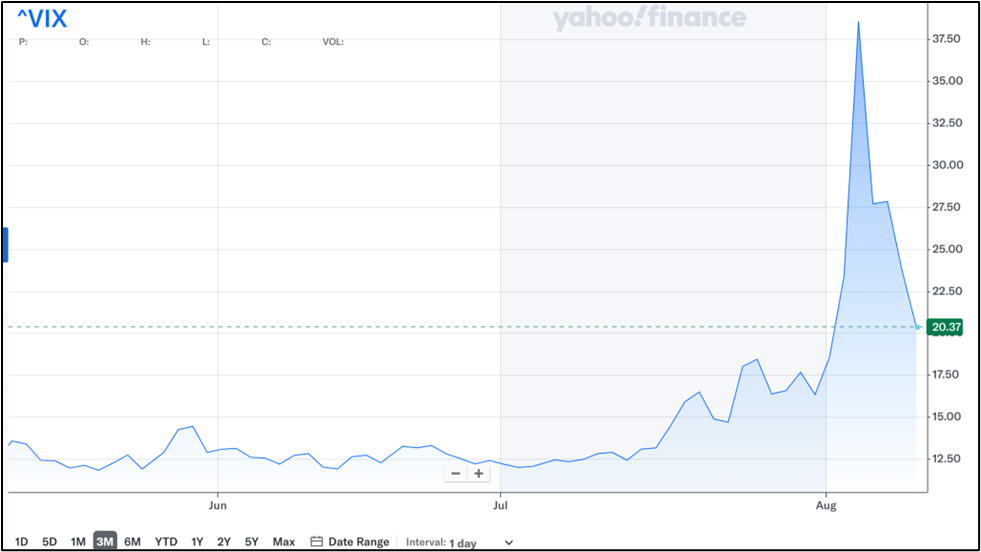
Figure 1: The VIX’s 3-month performance as of August 12th, 2024

The recent job report revealed that unemployment is now at the highest rate since October 2021, at 4.3% as of August 2nd. This, along with the realization that the Fed may have gone too far in maintaining higher restrictive short-term interest rates, hindered the performance of the S&P 500 and led the VIX to increase. Japan’s decision to raise interest rates for the first time in 17 years also influenced this spike. Carry trades are common through the Yen currency, due to Japan’s export-driven economy, which helps investors borrow money in Japan with lower interest rates and get higher returns on foreign investments such as US bonds. However, with Japan’s interest rates and the US expecting a rate cut, the US dollar will become less valuable and has caused shifts in the international markets.

Although the VIX spiked, it is important to remember to not make sporadic and emotional decisions that may impact your portfolio and lessen your wealth. Although a recession may be near, it is important to trust your financial portfolio and stick to long-term equity-based portfolio management. The economy cycles, and you can’t predict its performance, which is why it is imperative to choose stocks with strong earnings, solid cash flow, and little or no debt.

By Sam Bassett
Pick up the Pencil Before the Racquet or Driver

Congratulations! You are recently retired and all your saving and planning over the years have finally paid off. You feel optimistic about your future and you are deciding whether to start playing more golf or maybe try out tennis at the local club. However, before you pull out your racquet or driver you must first plan for your spending throughout retirement.

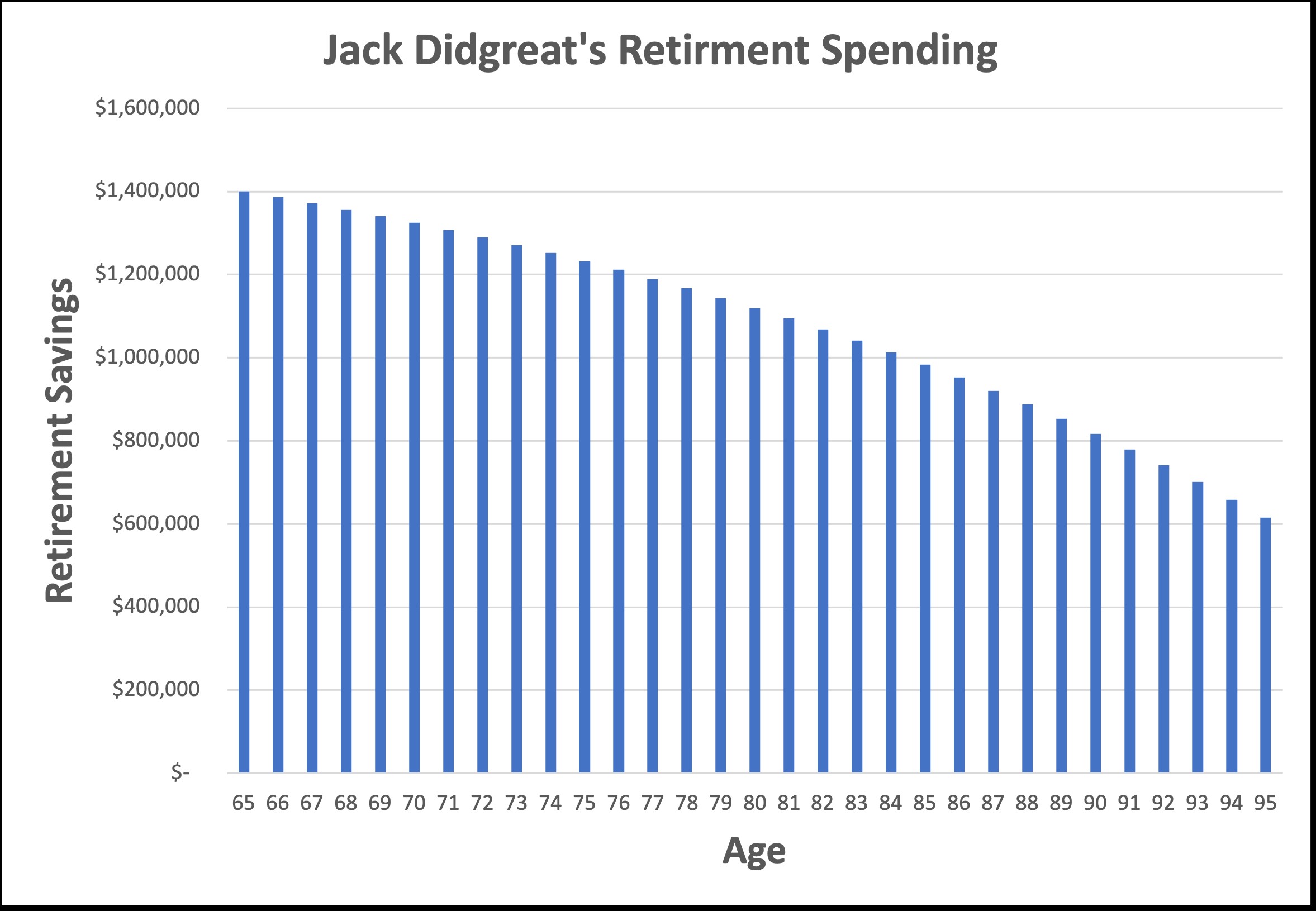
Budgeting your retirement savings and plan for your withdrawals is crucial to enjoying life once you have successfully retired. Let’s look at three different examples of great savings, fair savings, and poor savings throughout retirement. Jack Didgreat, Jill Didfair, and John Didpoor are three individuals who each accumulated $1,400,000 in retirement savings by the start of their retirements at 65 years old, and generate a conservative investment return of 4% annually.

Investment Account$300,000(dividends & capital gains)
Traditional IRA$700,000(distributions taxable)
Roth IRA$50,000(non-taxable)
Pawleys Dividend Fund$300,000(dividends & capital gains)
Bank savings$50,000(interest taxable)
 $1,400,000 

Here are the distributions and spending stories of the $1,400,000 for all three individuals:

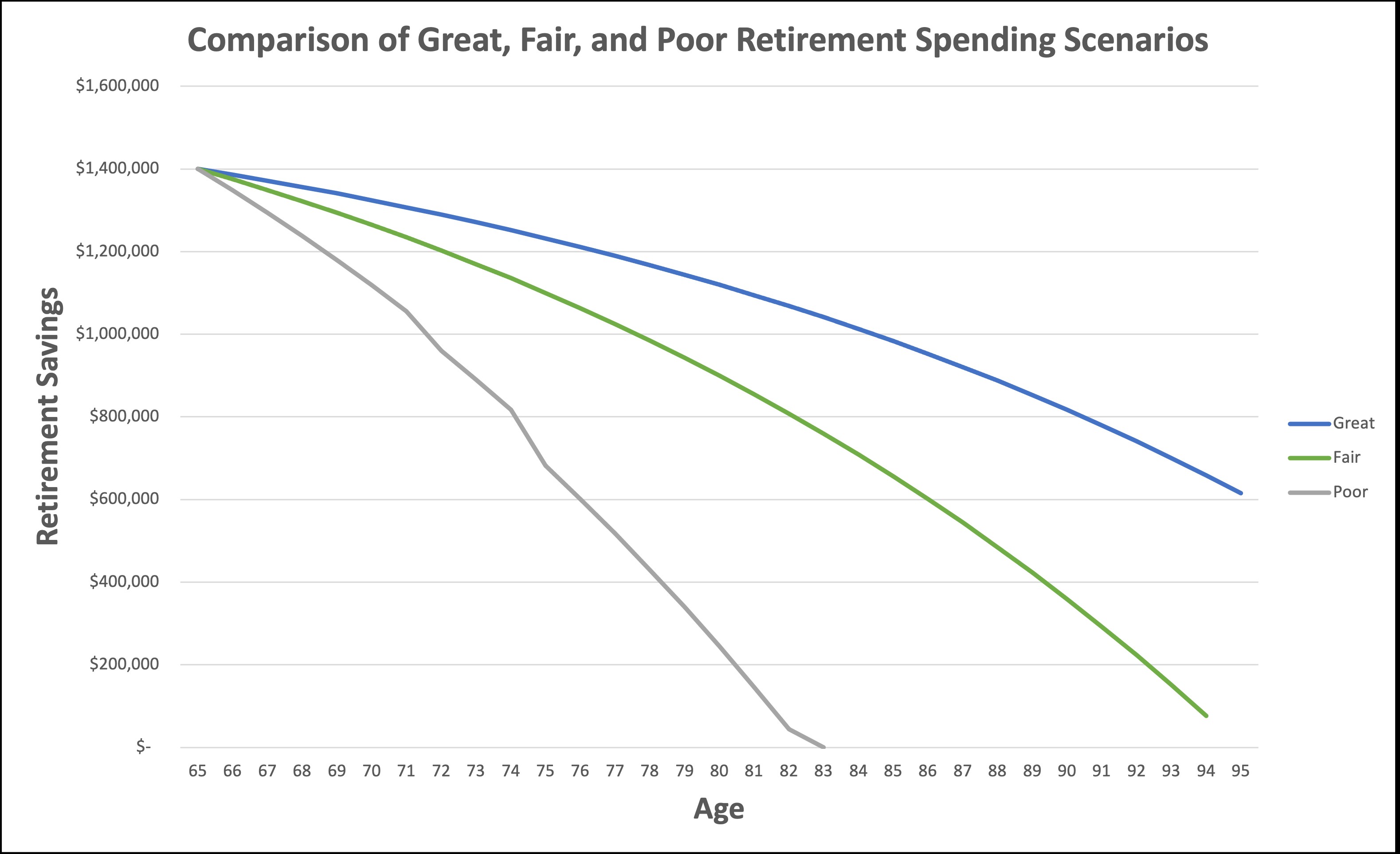
Jack Didgreat decided he would withdraw $2,500 monthly and an additional $40,000 each year. When he planned it out, he would still have $569,403 at 96 years old, giving him financial room for other purchases throughout retirement, and safety for whatever life throws at him.

Jill Didfair decided to plan her savings like Jack, but decided to withdraw $3,000 monthly and an additional $45,000 each year. Doesn’t seem like that much more than her friend Jack, right? Jill Didifair would actually run out of her savings at 94 years old, which does not give her much financial room throughout retirement and leaves her with nothing to support herself past 94. It is crazy how Jill spending an extra $500 dollars each month and an extra $5,000 each year leaves her with nothing compared to Jack!

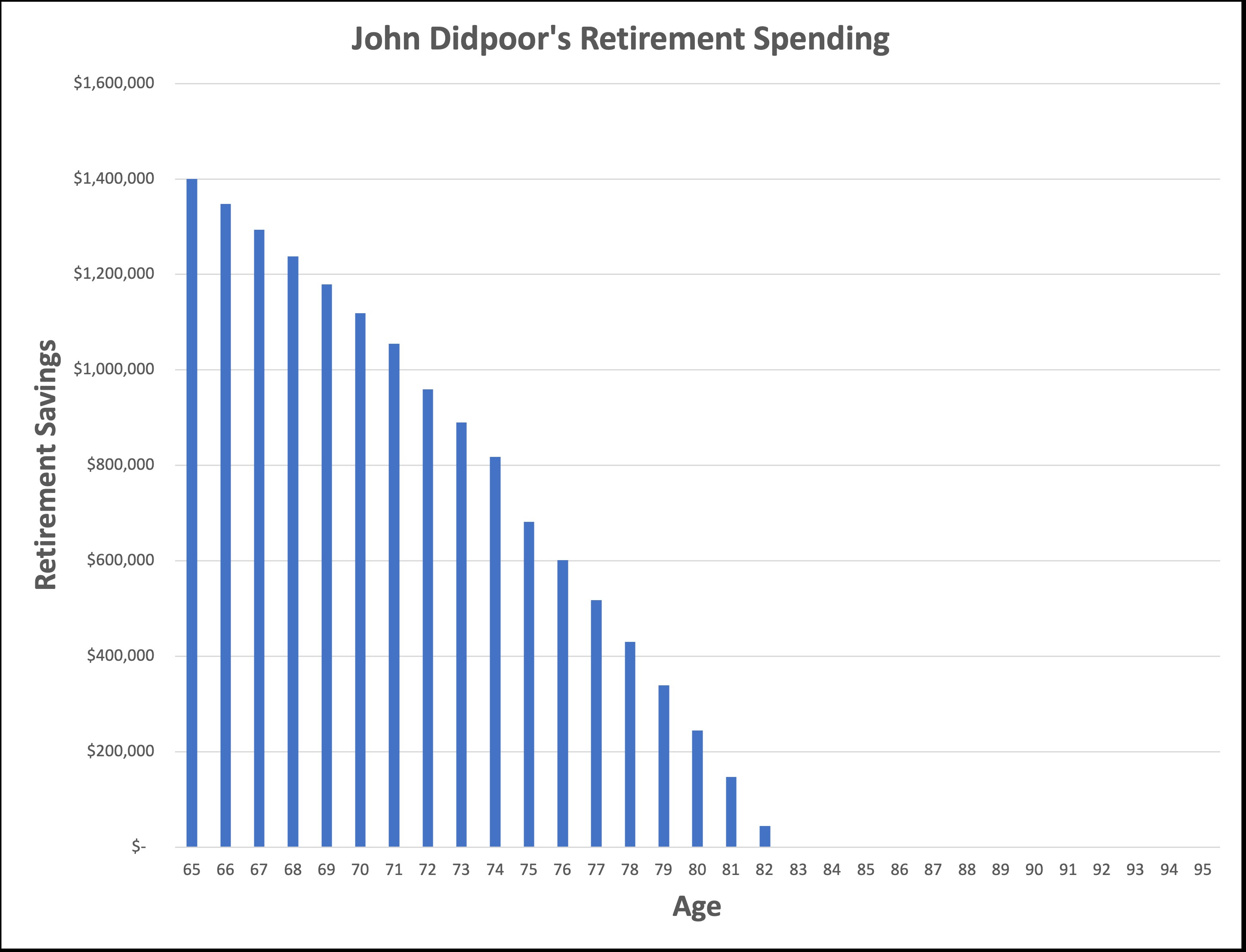
John Didpoor did not create a careful plan and decided to withdraw $4,000 monthly, and an additional $80,000 each year. John Didpoor also decided to buy himself a new truck at 71, and a new pool at 74. John was so excited for retirement spending that his savings actually ran out at 82 years old. John did not plan well and had to determine a new method of income to support himself past 83 years old.

When creating a plan, one of the most important things to note from this example is how a little can go a long way. These three examples shed light on the importance of careful retirement spending and a well-devised plan. In comparing Jack Didgreat’s spending plan to Jill Didfair’s spending plan, the two do not seem much different. Jill Didfair only spent $500 more than Jack monthly and $5,000 annually, for a total of only $11,000 more than Jack each year of retirement. However, once Jill reached 95 years old she was out of money, and Jack still had $569,403 in savings. That difference is substantial! As articulated throughout these spending scenarios, it is incredibly important to make a plan for retirement spending before you realize you are in the same shoes as John Didpoor.

Contributed by Sam Bassett.

Opportunistic Entrepreneur with Kathryn Schwartz – WE Talk Careers

Have you ever dreamed of starting up your own thing? Have you wondered when to take the first steps into entrepreneurship? Spoiler alert: it’s before you think you’re ready.

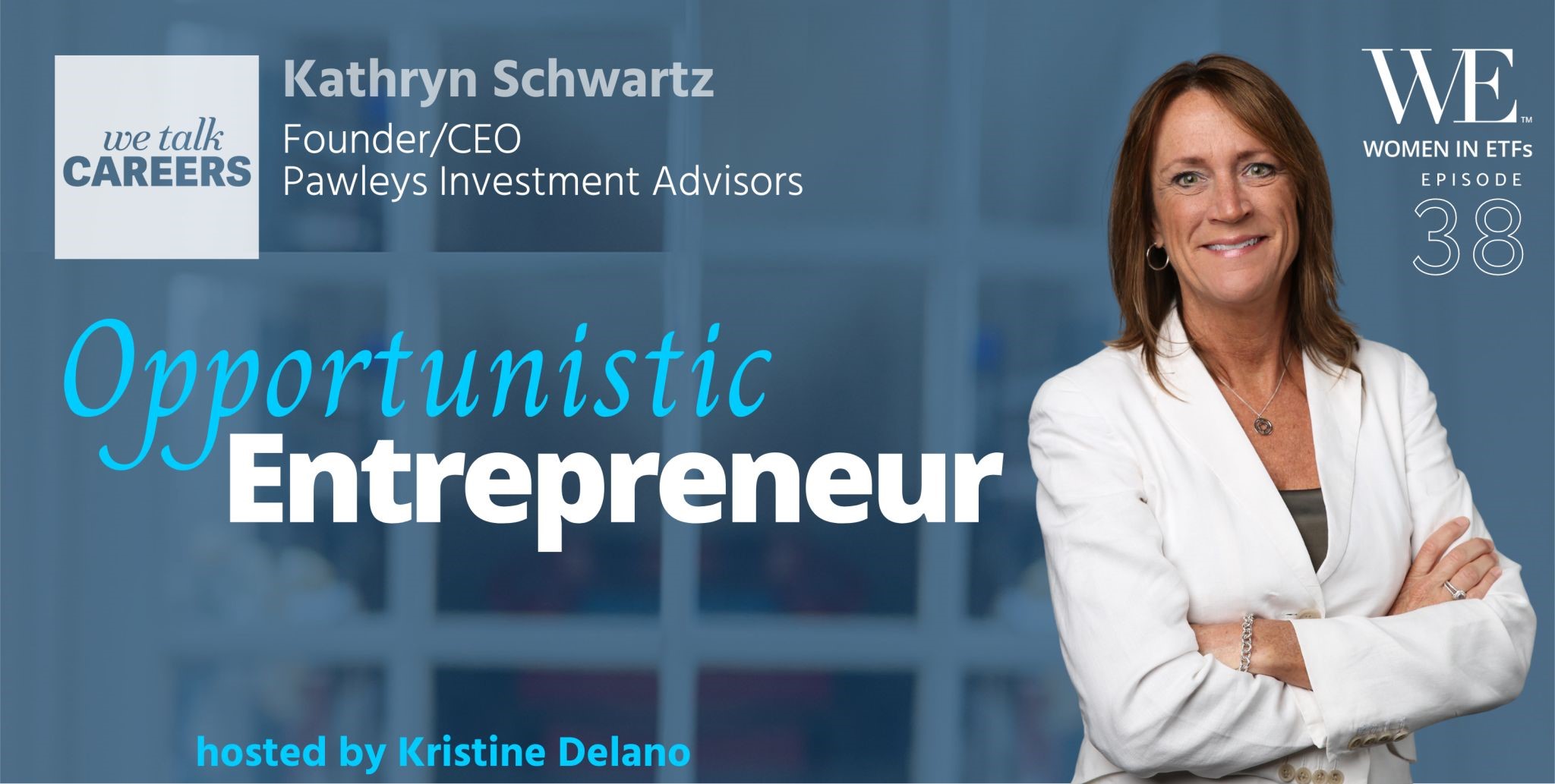
The latest episode of WE Talk Careers is available now. In this episode, we’re talking with Kathryn Schwartz about her experience becoming an opportunistic entrepreneur. She joins host Kristine Delano for an exciting discussion about capitalizing on opportunities to become a successful entrepreneur.

https://podcasts.apple.com/us/podcast/opportunistic-entrepreneur-with-kathryn-schwartz/id1607914251?i=1000612310776

Listen now wherever you get your podcasts.
Listen on Spotify: https://buff.ly/3HTMg5C
Listen on Apple Podcasts: https://buff.ly/3pqM2g8
Listen on Amazon Music: https://buff.ly/42izki4

Visit www.kristinedelano.com for your Thrive Guide: a compilation of the most requested and insightful advice from our guests on leadership and advancement.

Book recommendation from special guest Kathryn: 
The Alchemist by Paulo Coelho