“Invest Right, Live Right™” The Blue Zone Way

Okinawa is a chain of over 150 tropical islands Southeast of mainland Japan. Here you will find more 100+ (centenarians) year old people than just about anywhere else on the planet. Today we will discuss why the phenomenon of Okinawa and other cities like it provide us with important takeaways for you and your portfolio.

At Pawleys Investment Advisors our philosophy is to “Invest Right, Live Right™” This slogan works only if the living right piece comes first. Nothing illustrates the point better than the five Blue Zones. Blue Zones are regions of the world where people consistently live longer and healthier lives than average, with a higher percentage of their populations reaching age 100 than anywhere else in the world. “Blue Zone” was a term coined by researcher Dan Buettner, who identified five original Blue Zones: Okinawa, Japan, Sardinia, Italy, Ikaria, Greece, the Nicoya Peninsula, Costa Rica and Loma Linda, California. But what do the people who inhabit Blue Zones do that allows them to live so long? Researchers found nine shared habits among those living in Blue Zones which they referred to as the Power 9: move naturally all day, know your purpose, down-shift stress, follow an 80 % rule for portions, favor a mostly plant diet, enjoy moderate wine with friends, put loved ones first, belong to a faith/community, and cultivate a close social circle.

What are some of the parallels of Blue Zone habits to your investment style?

First, it is important to understand why the phenomenon of the Blue Zone is important for you and for society. These habits offer evidence based, low-cost strategies to prevent chronic diseases like heart disease, diabetes, and dementia. They can help us reshape health systems to focus more on prevention rather than treatment. They remind us that health isn’t just genetic, it’s cultural, environmental, and behavioral. Let’s look at some of the investing parallels we can gather from Blue Zones…

Blue Zone HabitBenefitInvesting Parallels
Purpose   A strong sense of meaning and daily motivation   People continue to feel useful well into old age  This can add up to 7 years of lifeYou should be investing with a purpose driven plan that keeps you on track in rough markets.
80 % Rule    “Hara hachi bu” in Okinawa means to eat until 80% full.Prevents chronic diseaseSpend less than you earn & always leave room in your budget and portfolio.
Community &  loved onesHaving an emotional safety netWork with an advisor and peer network for accountability and support.

Living Right and Investing Right™ go hand in hand. For investors and those who aim to live long, happy and healthy lives here are some final takeaways from the phenomenon of Blue Zones.

  • Health is your greatest asset. Compounding only works over a long, healthy life span.
  • Lower stress corresponds with better decisions. Blue-Zone down-shifting stress mirrors the calm mindset that investors need to resist panic-selling.
  • Moderation beats extremes. Just as centenarians avoid crash diets, disciplined investors avoid gambling on volatile or dicey investments.

When you Invest Right, you build a portfolio that can support decades of purpose-filled living. When you Live Right, you give that portfolio the time it needs to grow.

By Greyson Harris

Why Bond Funds Fluctuate and a Safer Alternative

How a 20% slide in the Lord Abbett Income A (LAGVX) happened — and how CDs can help.

 The Price of LAGVX from Jan 2021 – Jun 2025 was down 20 %

Bond Math on a Napkin

LAGVX holds intermediate‑term corporate bonds with an average duration of about 6½ years.  Duration is a measure of how volatile a bond will be – the greater the number, the more the bond will fluctuate in changing interest rate environments.

  • Bonds pay fixed coupons, but the market discounts those coupons at today’s yields.
  • When yields rise, the discounting is tougher, so prices fall.
  • Since early 2021, yields on similar bonds climbed roughly 3 percentage points (10‑yr Treasury 1.5 % up to 4.4 %; BBB credit spreads 0.8 % up to 1.1 %).
  • Rule of thumb: price change ≈ –duration × yield change, so -6.5 × 3 % ≈ –20 %. That’s exactly what showed up in the fund’s price as shown in the chart above.

The Climb Back

A 20 % decline means the fund needs a 25 % gain just to break even. Using the same duration math, that would require yields to drop roughly 3.5 percentage points — essentially a return to the ultra‑low‑rate environment of 2021.

Where Inflation Fits In

If inflation stays elevated, the Federal Reserve may keep rates higher for longer. That delays the yield drop LAGVX needs to recover, while inflation will also erode the real spending power of the coupons you do collect.

CDs: A Safer Alternative

Pairing your bond fund with a ladder of FDIC‑insured certificates of deposit can take the edge off rate shocks. Here’s a quick comparison:

Bond FundCertificate of Deposit
Price jumps around with interest‑rate moves.Even though the price fluctuates slightly, you will still earn your principal amount if held to maturity.
Income floats as the manager reinvests; price swings can swamp coupons in the short term.Guaranteed payout schedule if held to maturity.
Carries both rate risk and bond‑issuer credit risk.FDIC‑insured up to $250 k per bank (principal and Interest); no market risk if held to maturity.


Think of a CD as “sleep‑well” money. It won’t skyrocket if rates plunge, but it also won’t sink if rates rise. Holding a CD ladder can help you:

  • Lock in today’s higher yields.
  • Buffer portfolio volatility while you wait for bond prices to heal.
  • Retain your purchasing power steadier if inflation rises.

 The Take‑Away

Bond prices and their yields move like a seesaw. LAGVX slid 20 % because yields popped by about 3 percentage points. To claw that back, yields must fall by roughly 3.5% — a tall order unless the economy slows sharply and inflation retreats. CDs provide a straightforward hedge: fixed, insured income that doesn’t gyrate with daily bond‑market headlines.

By Greyson Harris

Feeling Whiplash from the Market’s Mood Swings?

Before you let headlines dictate your next move, take a breath and look at the data. History shows that the market often hands out its biggest rewards when optimism is scarce and nerves are frayed. In the quick read ahead, you’ll see why staying invested during dark days—and resisting the urge to chase the sunny ones—can make all the difference. Ready to let facts, not feelings, guide your portfolio? Let’s dive in. 

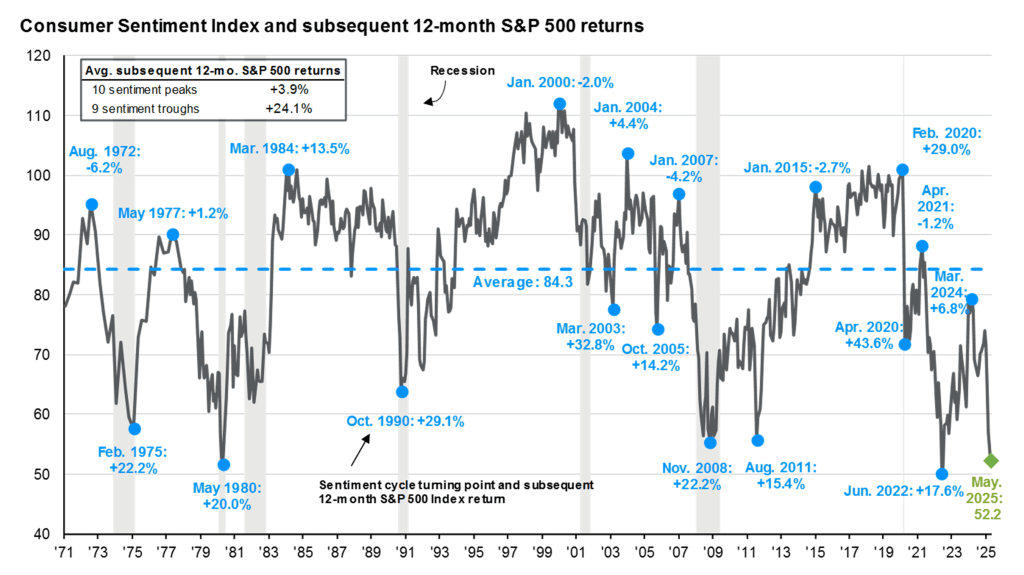
Chart 1: Consumer Confidence and the Stock Market

Source: JP Morgan Asset Management

This chart tracks the Consumer Sentiment Index against 12-month S&P 500 returns since the 1970s. When consumer sentiment hits extreme lows (like during recessions), stocks have historically delivered strong 12-month returns—averaging over 24% . At sentiment highs, when optimism runs rampant, returns tend to be much lower—just around 3.9% on average. This pattern reminds us that markets are not always rational in the short term—they react to mood swings, not just fundamentals. 

Other Key Takeaways: 

1. Fear Drives Sell-offs :

When consumer sentiment dips sharply, as seen during recessions, investors often panic and sell their holdings. However, history shows that these periods of extreme pessimism are often followed by strong market rebounds. 

2. Greed Leads to Overexuberance

On the flip side, when sentiment is overly optimistic, investors may rush into the market without considering valuation risks. This can lead to bubbles, as seen in the tech boom of the late 1990s. 

3. Discipline Yields Better Results

By staying disciplined and avoiding knee-jerk reactions to short-term volatility, investors can capitalize on market inefficiencies. For example, buying during periods of extreme pessimism (when others are selling) can lead to higher returns over time.

Chart 2: Missing the Market’s Best Days Has Been Costly (1995-2024)

Source: Hartford Funds

It’s natural to feel uneasy during market downturns. But history shows that pulling your money out of the market—even temporarily—can come at a steep cost.

The charts above make this clear: 

“Good days happen in bad markets” 

Over 1995–2024, half of the S&P 500’s 50 best days occurred during bear markets. Many of the biggest gains happened right when investors were most tempted to sell. 

“Missing the best days = Missing the gains” 

A $10,000 investment fully invested grew to $224,278 from 

1995–2024. Missing just: 

10 best days : Only $102,750 

20 best days : Just $60,306 

30 best days : A mere $38,114 

Why sitting out hurts 

Markets recover faster than you think. 

The best days often come out of nowhere—especially after big drops. Once you’re out, it’s nearly impossible to time your way back in without missing explosive rebounds. This underscores the danger of pulling money out during volatile times or low consumer sentiment. Staying invested, rather than timing the market emotionally, is crucial for long-term growth. 

By Greyson Harris