Amazing, inspiring, incredible, overwhelmingly emotional. These are the ways I have heard people describe the spectacle of turtle hatchlings scurrying from their nest near the dunes out to the ocean. This Tuesday, out of pure luck, I was able to watch the hatchlings for the first time. Words and pictures cannot begin to convey the powerful experience.
The story began a few months ago on an early morning when a momma loggerhead crawled out of the Atlantic Ocean onto the north beach of Pawleys Island. She dug out a cavern near the high water mark in which to lay her eggs. The eggs enjoyed approximately 80-90 days of toasty Carolina sun warming the sand that protected them. Fast forward to the late hours of this past Monday night, and the baby loggerheads were ready. They knew the time was right and they wriggled up out of the sand to head for the ocean to start their journey. The loggerheads are born along the southeastern coast and then they hit the surf and swim several miles out to the gulf stream. From there, they swim several hundred miles to the Sargasso Sea where they gobble jelly fish and grow strong. Hopefully, they do not get stuck here too long becuase it could turn into a bad airport layover experience, or even worse. They then swim all the way to Newfoundland and over to the Azores near Africa. Finally, the turtles swim back down to the Bahamas. I think the turtles may each take slightly different migratory routes, but you get the idea. After a couple of decades, and they are ready to reproduce. It is believed that the mother turtles return to nest on the same beaches where they were born. The journey is thousands of miles, and the turtles do not even receive any frequent flyer miles. Only 1/10,000 survives the incredible journey. This is why the mighty loggerhead is an endangered species. They face ghost crabs and seagulls when they are first born, and when they are older they face eels and sharks, just to mention a few of the many predators. Turtles may die if they become tangled in plastic debris or old fishing nets. If you think navigating the investment markets is difficult, think of the turtles’ journey!
On Tuesday morning, someone found a baby turtle in the parking lot for one of the public beach access points on Pawleys Island. Note: the parking lots are in the opposite direction of where the little loggerhead was trying to go. The wonderful volunteers from S.C.U.T.E. arrived and searched the dunes near the nest for hours. They rescued 32 baby turtles, tucking them into their pockets to keep them warm and safe. The turtles were totally worn out, because they had wandered the dunes all night trying to find their way. The temperatures were very cold overnight, which exhausted the little babies. The sea water is 78 degrees this week, and Tuesday morning the low temperature in the air was in the 50’s. The poor turtles wandered around the dunes all night, because they had lost their way to the ocean. Why would the turtles, who have enough smarts and instinct to make the journey all the way around the Atlantic to Africa and then back down to the Caribbean, get disoriented making a short 100 yard crawl to the crashing surf? Someone left their porch lights on in a beach house. Usually it is a courtesy or safety gesture to “leave on the porch lights,” but it can be disorienting and deadly along the beach for baby loggerheads. Thankfully, the turtles were collected and kept warm in a dark closet all day on Tuesday so they could rest up for the 2nd attempt to begin their journey. It is safest for the tiny turtles to swim out to the gulf stream at night, because during the daytime their profiles on the surface of the water are visible to predators from below. At 5:00 Tuesday evening, the turtles were brought back to where their nest was located. Here they are in their temporary housing from Tuesday:

Baby Loggerhead Turtles from Pawleys Island
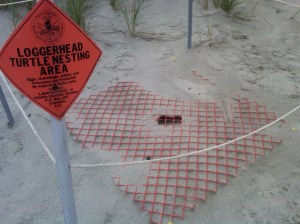
Here is their nest. The orange mesh protects the nest from predators. You can see the hole where they dug out of the sand the other night:
Loggerhead Turtle Nest on Pawleys Island
32 baby turtles scampered down the sand Tuesday night. They got tossed around by the surf but their persistence is almost mechanical. Once they started swimming, every now and then their tiny black heads popped out of the water as they caught their breath.
They took mine away.

Love at First Sight – Baby Pawleys Loggerhead
The next time you take a piece of information and consider using it as the basis for an investment decision, make sure it is not a “porch light” that may actually end up misguiding your investment dollars. Be persistent and mechanical in your process and it will improve your results.
invest right, live right…and if you haven’t had the opportunity yet, I hope you can see the baby loggerhead turtles some day.
© 2012-2016 Pawleys Investment Advisors, LLC. All rights reserved.



 Pawleys Investment Library